A First Visit to a Shared Community Space
A first visit to a shared community space is easier when you can read the room, identify who is responsible, and choose a clear next step.

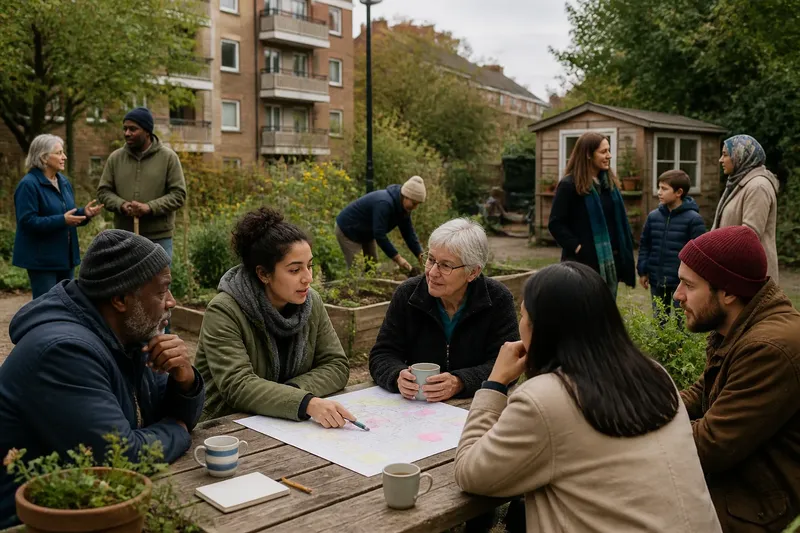
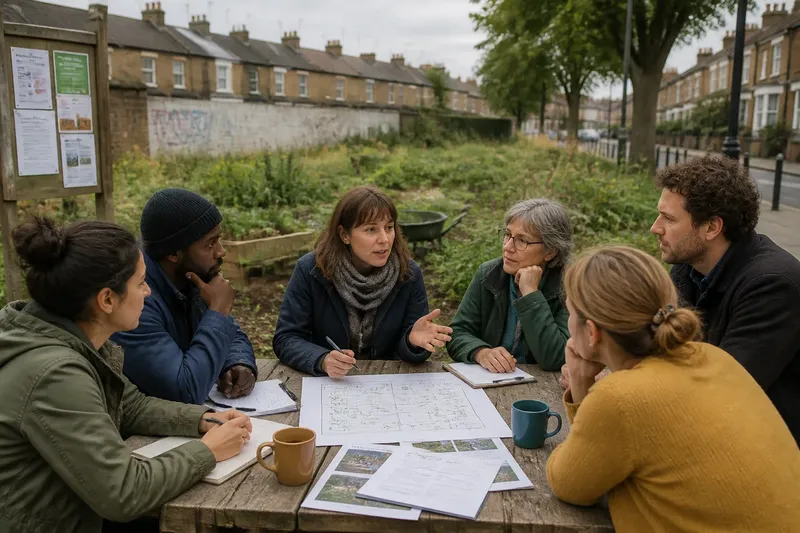
Where do you start when you arrive at a shared community space and do not know its routines? On a first visit to a shared community space, begin by finding the boundaries: which areas are open, who is coordinating, and what visitors may do. That is more useful than trying to understand every activity at once.
Read the layout before joining an activity
Pause near the entrance and look for a room map, sign-in point, noticeboard or posted schedule. Check which doors are marked private, which areas have equipment, and whether people are carrying materials through a particular route. Treat an open doorway as an invitation to ask, not proof that every area is available.
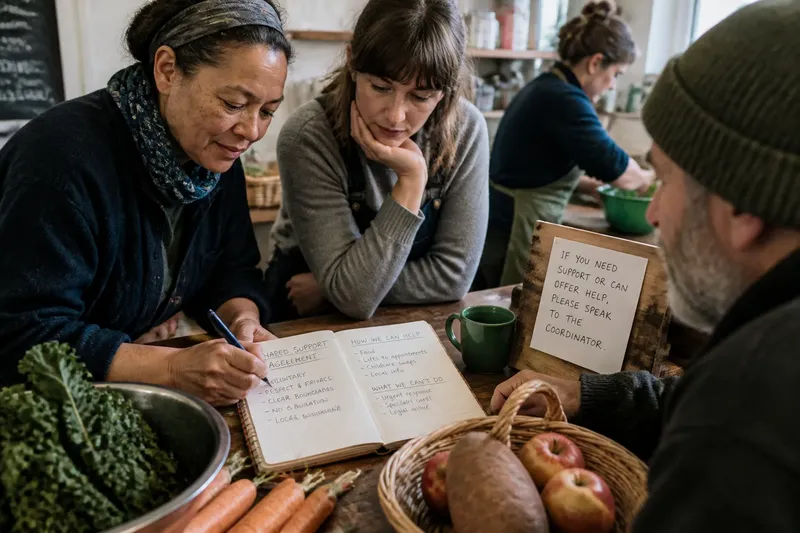
Identify a person who can answer practical questions. It may be a named host, a volunteer at a welcome desk or someone wearing an organiser’s badge. If nobody is clearly responsible, ask a person who is not occupied: “Who should I speak to before I look around?”
Notice how the room is being used without hovering over people. A workshop bench, kitchen counter or storage cupboard may have a specific role that is not obvious to a newcomer. Signs and a short question are better guides than guessing from what people happen to be doing.
Check the boundaries that are not obvious
Shared spaces often have overlapping uses: a hall may host one group in the morning and another later, while a garden may have plots cared for by different people. Before entering a work area, moving supplies or taking photographs, ask the host what is permitted. Follow posted instructions for equipment, food handling and restricted areas.
Pay attention to transitions as well as activities. Ask where coats, bags and outdoor shoes belong, whether visitors should sign in, and which route keeps access clear. These small details help you understand how the space is organised without interrupting the work already under way.
If you have a practical access or communication need, ask what arrangements are available and share only the information needed to get a useful answer. If the host cannot answer, ask who can. For safety concerns involving tools, food preparation or the building, follow the responsible person’s guidance rather than improvising.
How can you tell what is open to visitors?
Does a sign-up sheet mean I can join?
It suggests that people can register, but check whether the sheet is for this session and whether places remain. Ask the host before adding your name if the purpose or timing is unclear.
Should I join a task that looks simple?
Ask who is coordinating it and what the task involves before touching materials. If it is open, request a clear starting point and where finished work belongs.
What if the activity is already under way?
Wait at the edge until there is a natural pause, then ask whether visitors may observe or take part. If the group is concentrating, follow the host’s suggestion to wait or return another time.
Can I take photos to remember the layout?
Ask first, because people, personal belongings or private work may be in the frame. If permission is not clear, make a written note of the public directions instead.
Choose a contained first contribution
Once you know what is open, choose a task with a clear beginning and end. Ask where to find the materials, who will answer questions, and where completed work goes. Think of entering a room already in use like joining a board game in progress: learn whose turn it is before moving a piece.
Say you arrive at a neighbourhood repair room while volunteers are sorting donated lamps. You ask the host whether visitors can help; they point to a box of loose, non-electrical parts and explain that sorted pieces go into labelled trays. You sort those parts, check the tray labels with the host, and leave the specialist benches alone. The result is a defined contribution, and you have learned whom to approach if you return.
Use these checks to decide what to do next:
- Check the entrance notice. If it names a host or sign-in point, go there; if it is missing or unclear, ask a person near the entrance where visitors should start.
- Check the room boundary signs. If an area is marked private or staff-only, stay out; if no boundary is marked but the use is unclear, ask before entering.
- Check whether a task has an organiser. If someone is coordinating it, ask that person for a starting point; if nobody is available, observe from the edge and wait for a suitable moment.
- Check the instructions for materials or tools. If the task and handling rules are clear, follow them; if instructions are absent or confusing, do not handle the items and ask for guidance.
- Check whether your chosen task has a clear finish. If you know where the work goes when complete, begin; if not, ask where to leave it or choose a different task.
- Check whether a route is used for carrying or access. If people need it clear, keep bags and materials out of the way; if the route is uncertain, ask where belongings should go.
What should you do if no one is available?
Look for a public contact name, a schedule or instructions on the noticeboard. If the room is busy, wait somewhere that does not block an entrance or work route, then ask a brief question when someone is free: “I’m visiting for the first time. Who can explain how this room is used?”
If nobody can speak with you, do not enter a restricted area or start moving items to make yourself useful. Note the public contact method or a suitable session time and leave. A return visit with a named host is a better way to learn the space than guessing at its rules.
Leave with a clear route back
Before leaving, return any materials you were asked to use and check whether you need to sign out. Ask when visitors can next come, who to ask for, and whether you should bring anything. These answers help you arrive with a purpose rather than having to repeat the same orientation.
If the space seems suitable, choose one specific next option: attend a named activity, contact the host or return when a public session is listed. If the layout, noise or routines do not work for you, that is also useful information. A first visit to a shared community space is successful when you leave knowing one practical next move, even if that move is to look elsewhere.